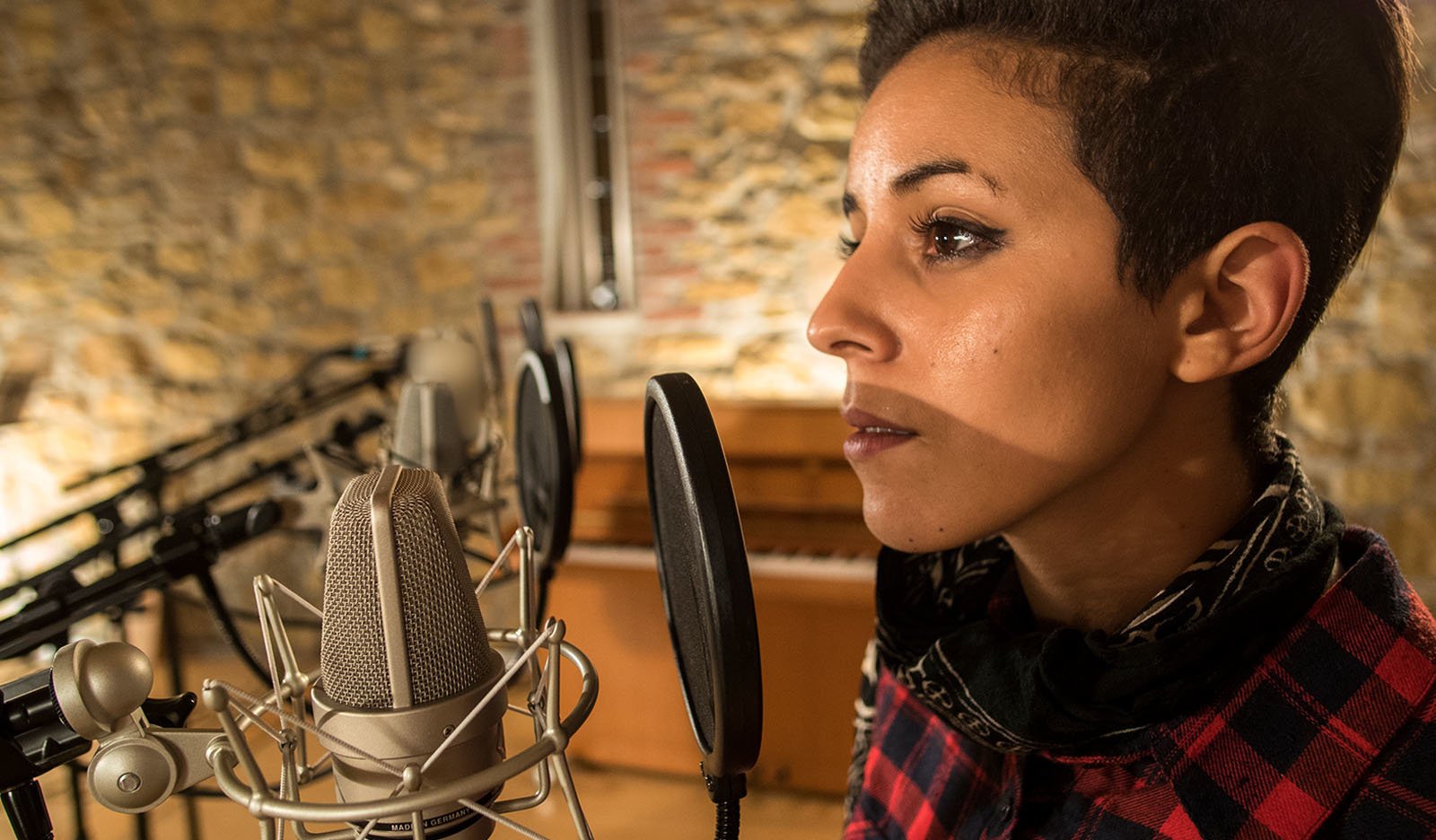
Microphone Technique Is the Real Mix Bus
Before EQ, before compression, before a single plugin loads — the microphone has already decided what you’re working with. Here’s how placement, pattern, and distance shape everything that follows.
A microphone doesn’t just pick up sound — it interprets it. The mic you choose, how far it sits from the source, the angle it’s aimed at, and the room around it all shape the character of a recording before a single knob gets touched. Get the technique right and the mix practically finishes itself. Get it wrong, and no amount of processing later fully undoes it.
That holds true whether you’re tracking in a treated studio or a converted bedroom. How you place and use a microphone determines how honest, warm, or exciting the final take feels.
At Studio 1212 Las Vegas, we work with well-kept gear and engineers who’ve spent years learning where a mic wants to sit for a given voice or instrument. Even the best room and the best converters can’t rescue a poorly placed mic. Here’s what we think about on every session.
Capturing the Right Sound
Different microphones respond to different frequency ranges and sound sources by design. Choosing the right one — and using it correctly — for each instrument or vocal has a direct impact on the clarity, tone, and overall quality of what gets recorded.
A dynamic mic tends to handle loud sources well, like a guitar amp or a drum kit. A condenser mic is generally the better pick for quieter, more detailed sources, like vocals or acoustic instruments.
Our engineers know how to match the microphone to the moment, and we keep enough variety on hand to switch quickly and find the right voice for every track.
Creating a Sense of Space
Mic placement can also shape how big or small a recording feels. Adjust the distance between microphones and you adjust the perceived size of the room and the depth of the sound.
Spread a pair of mics further apart and you widen the stereo image, giving the illusion of a larger space. Move them closer together and you get a tighter, more focused, near-mono sound.
Studio 1212 uses stereo miking, room miking, and everything in between to find the right sense of space for each track.
Controlling Feedback and Background Noise
Good mic technique also keeps unwanted sound out of the recording. Feedback happens when a mic picks up sound coming back from the speakers. Background noise — HVAC hum, traffic, anything ambient — can just as easily bleed into a take.
We lean on directional microphones to focus on the source and reject sound from other directions, and use noise gates to mute a channel automatically when there’s nothing worth capturing.
Adding Depth and Dimension
Layering microphones and adjusting their placement can build a more complex, exciting sound than any single mic could capture on its own.
A close mic on a guitar or snare grabs the direct, present sound of the instrument. A room mic further back picks up the natural ambiance around it. Blended together, the two create a recording with real depth — not just loud and quiet, but near and far.
Our engineers use exactly this kind of layering to give every track dimension, not just volume.
Enhancing the Performance
The right mic technique doesn’t just shape the sound on the recording — it shapes the performance that makes it onto tape. A mic and a headphone mix that feel natural let a singer or player relax into the take instead of fighting the setup.
When placement, gain, and monitoring are dialed in before the first note, the artist can focus on the performance instead of second-guessing the sound. That’s often the difference between a technically clean take and one that actually feels alive.
Hear the difference good technique makes
Bring your next session to Studio 1212 and let our engineers find the right mic, the right placement, and the right room for your sound.
Book a Session →